A live stream can reach thousands of viewers worldwide in seconds. But reach alone doesn’t guarantee engagement. If the experience feels flat or disconnected, audiences can drop off within minutes. Today’s digital media is largely shaped by short-form content, social media feeds, and 30-second videos, making it one of the biggest challenges for event organizers to hold attention.
That’s why live streaming today requires more than simply broadcasting an event online. It demands thoughtful planning and deliberate engagement with the audience.
Moreover, live events are no longer limited to physical venues. Organizations host conferences, product launches, concerts, and corporate meetings for audiences attending both in person and online. While streaming technology enables reaching global audiences, keeping viewers engaged throughout the event requires a well-devised, interactive experience.
With the right strategy, live streaming can transform passive viewers into active participants and create a memorable event for both virtual and in-person audiences.
In this blog, we’ll explore 10 live event streaming tips that help event organizers create engaging broadcasts, strengthen audience participation, and improve results for both virtual and hybrid experiences.
Why Live Event Streaming Requires More Than Just a Camera
Many organizers assume streaming an event is as simple as turning on a camera and going live. In reality, successful streaming requires a carefully coordinated production environment.
Professional broadcasts rely on:
Multi-camera video production
Real-time audio management
Stable internet connectivity
Encoding and distribution platforms
Audience engagement tools
Without proper planning, even small issues like poor audio or buffering can quickly reduce viewer engagement.
This is why experienced teams rely on structured live-streaming production tips and professional-grade infrastructure to deliver high-quality streams. A well-designed professional event streaming setup ensures the broadcast remains stable while supporting audience interaction and engagement features.
Importance of Audience Engagement in Virtual & Hybrid Events
In physical venues, energy comes from the crowd. Applause, laughter, and audience reactions naturally create engagement. Virtual audiences experience events differently. Without intentional strategies for engaging remote viewers, they may quickly disengage or stop watching.
Successful digital events focus on:
Encouraging live stream audience interaction
Using polls and Q&A sessions
Incorporating interactive segments throughout the program
Utilizing modern interactive live streaming tools
These strategies transform passive viewers into active participants and help maintain engagement throughout the event. Strong hybrid event streaming tips ensure that both in-person and online audiences feel equally involved in the experience.
How To Prepare for a Successful Live Stream
Before going live, organizers should evaluate both the technical and engagement aspects of the event. Preparation typically includes:
Testing the professional event streaming setup
Confirming camera and audio quality
Selecting appropriate interactive live streaming tools
Designing the event agenda to support engagement
Following proven live streaming production tips during the planning stage significantly reduces technical risks and improves the overall viewer experience. With the right preparation in place, organizers can focus on creating meaningful moments for their audience.
Now let’s explore 10 actionable live-event streaming tips to help maximize engagement and interaction.
10 Live Event Streaming Tips to Boost Audience Engagement and Interaction
Creating an engaging live event stream requires careful planning and the right tools. From ensuring a reliable streaming setup to fostering real-time interactions, these tips will help you connect with your audience and provide an unforgettable experience.
1. Start With a Reliable Professional Event Streaming Setup
The first and most important live event streaming tip is to build a strong technical foundation. A stable professional event streaming setup ensures that audio, video, and connectivity remain consistent throughout the broadcast.
A professional streaming environment typically includes:
Multiple cameras for dynamic coverage
Professional microphones and live audio mixing
Encoding systems for video distribution
High-speed internet with redundancy
Production teams like LIVE PROS typically integrate broadcast cameras, professional sound reinforcement, and reliable encoding systems to ensure that the stream performs under real-world conditions. Without a proper professional event streaming setup, even the best content can suffer from buffering, dropped connections, or poor video quality.
2. Design Event Around Virtual Event Engagement Strategies
A common mistake in streaming is treating online viewers as passive observers. Instead, successful organizers build virtual event engagement strategies directly into the event structure.
Effective engagement strategies include:
Live polls and surveys
Q&A sessions with speakers
Audience chat moderation
Scheduled audience interaction segments
Strong virtual event engagement strategies ensure remote attendees remain active participants rather than simply watching a broadcast.
3. Use Interactive Live Streaming Tools
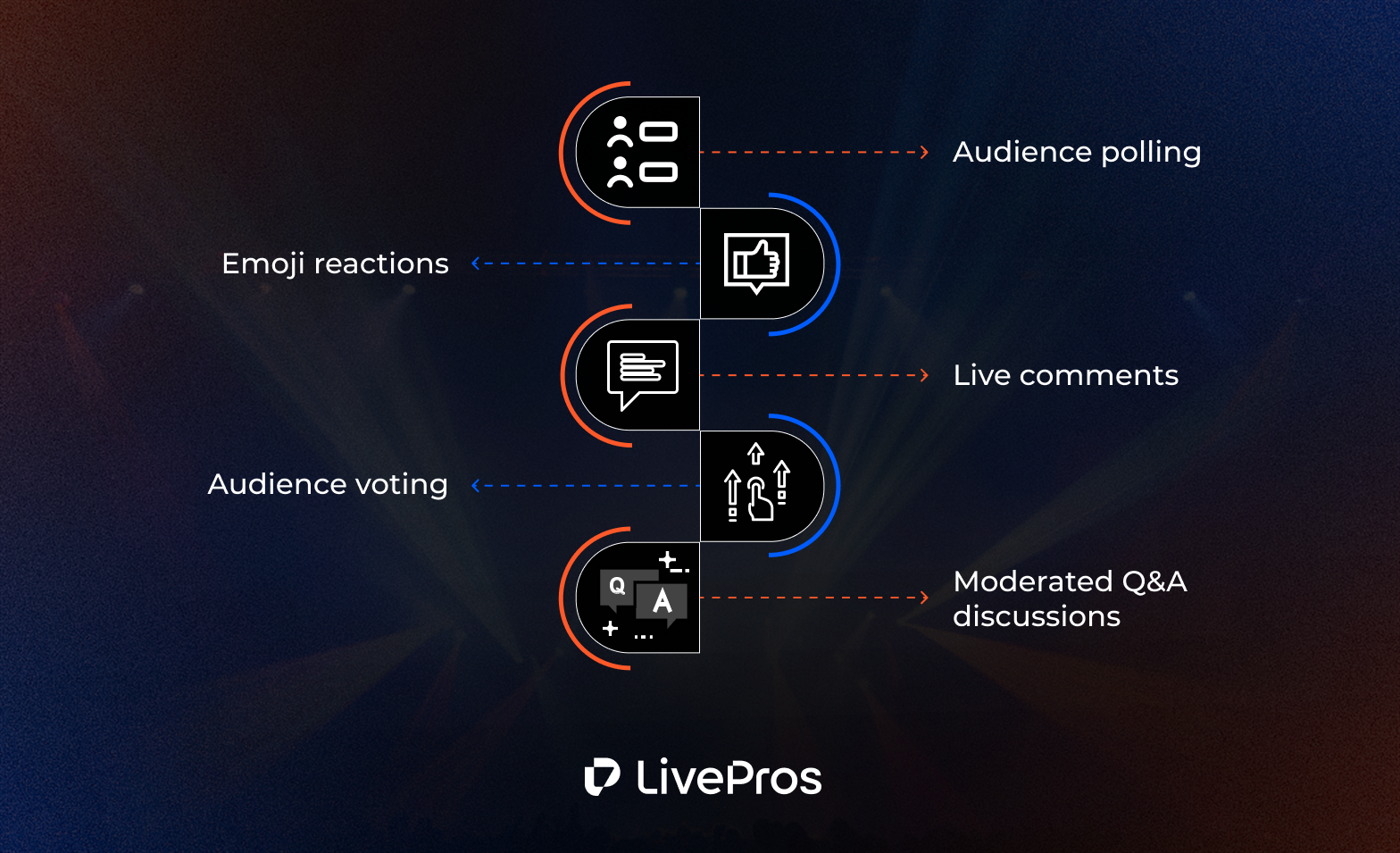
Modern streaming platforms offer a range of interactive live streaming tools that make events more dynamic and engaging. These tools help facilitate:
Audience polling
Emoji reactions
Live comments
Audience voting
When used effectively, interactive live streaming tools encourage participation and enhance audience interaction throughout the event.
4. Encourage Real-Time Live Stream Audience Interaction
One of the most effective live event streaming tips is to encourage consistent audience interaction during live streams. Viewers are more likely to stay engaged when they feel involved in the conversation.
Ways to promote live stream audience interaction include:
Inviting questions from remote viewers
Highlighting audience comments during the stream
Asking viewers to vote on topics or outcomes
Featuring live social media reactions
Active live stream audience interaction transforms passive viewers into engaged participants.
5. Incorporate Hybrid Event Streaming Tips
Many modern productions now include both physical attendees and remote viewers. Applying strong hybrid event streaming tips ensures both audiences receive a cohesive experience.
Key hybrid event streaming tips include:
Designing content for both in-room and remote audiences
Ensuring camera angles capture the speaker and audience reactions
Using large screens so in-person attendees can see the remote questions
Integrating digital participation tools into the live event
Well-planned hybrid event streaming tips ensure neither audience feels secondary to the other.
6. Prioritize High-Quality Audio Setup
While video quality often gets the most attention, audio clarity is critical for successful streaming. One of the most overlooked live event streaming tips is investing in professional sound systems. Poor audio can quickly reduce viewer retention.
Professional productions typically include:
Dedicated microphones for speakers
Real-time audio mixing
Backup microphones
Monitoring systems for engineers
Clear sound improves both audience understanding and overall production quality.
7. Apply Professional Live Streaming Production Tips
Behind every successful broadcast is a structured set of live streaming production tips that guide technical execution. Important live streaming production tips include:
Conducting full technical rehearsals before going live
Testing internet bandwidth under realistic conditions
Preparing backup streaming equipment
Coordinating cues between speakers and technical staff
These live streaming production tips ensure the broadcast remains stable even under pressure.
8. Structure Content for Online Viewing
Online audiences behave differently from in-person audiences. Effective live event streaming tips account for shorter attention spans and digital viewing habits.
Best practices include:
Shorter presentation segments
Dynamic transitions between speakers
Visual graphics to support presentations
Scheduled breaks to maintain engagement
Structuring content this way supports both virtual event engagement strategies and improved live stream audience interaction.
9. Monitor Audience Engagement Data
Successful streaming strategies rely on real-time analytics. Tracking engagement metrics helps organizers understand how viewers interact with the broadcast.
Important metrics include:
Viewer retention time
Chat activity levels
Poll participation
Geographic viewer distribution
Monitoring these metrics helps refine live event streaming tips for future broadcasts.
10. Work With Experienced Streaming Production Teams
Finally, one of the most important live event streaming tips is working with experienced production professionals. Professional teams manage:
Camera switching and video encoding
Real-time troubleshooting
Integration of interactive live streaming tools
Maintaining a stable professional event streaming setup
Experienced teams also implement proven hybrid event-streaming and structured live-streaming production tips to keep broadcasts running smoothly.
When these strategies are supported by the right production expertise, event streaming becomes far more than a basic broadcast. It becomes a seamless experience in which both in-person and virtual audiences remain connected and engaged throughout the event. This is where experienced production teams like LIVE PROS bring value, combining professional streaming infrastructure, audio mixing, and live production management to ensure every broadcast performs reliably.
Get the Professional Live Event Streaming Management with LIVE PROS
Successful event streaming requires more than a camera and an internet connection. It demands reliable infrastructure, thoughtful planning, and experienced production teams who understand how to deliver a seamless broadcast under real-world conditions.
LIVE PROS provides professional streaming production for concerts, corporate conferences, brand activations, trade shows, weddings, and hybrid events across Los Angeles. Our team combines a stable professional event streaming setup with advanced interactive live streaming tools to create engaging digital experiences that keep audiences connected.
From camera systems and audio mixing to platform integration and real-time monitoring, we manage every layer of the broadcast to ensure your stream runs smoothly. We also help implement proven live-streaming production tips to drive stronger audience engagement and more effective virtual event strategies.
Whether you’re hosting a hybrid conference, a virtual product launch, or a live performance, LIVE PROS ensures your audience experiences the event exactly as intended, clearly, reliably, and without disruption.